
“Carbs make you fat.”
It sounds decisive. It feels scientific. It gives you something clear to remove.
It is also incomplete.
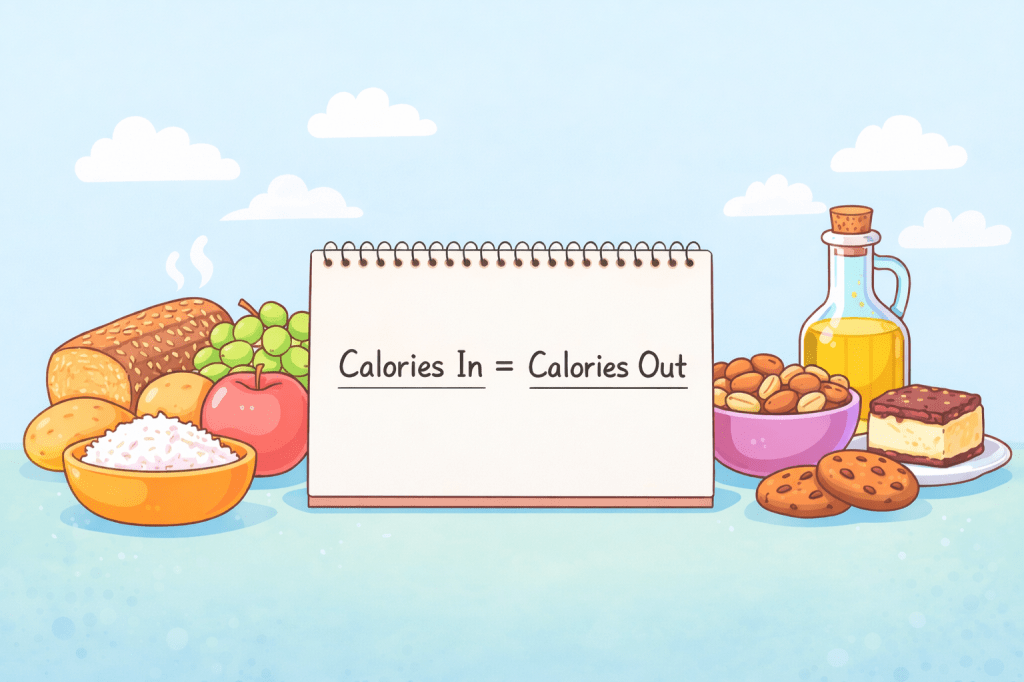
Carbohydrates do not cause fat gain. Chronic energy surplus does.
Carbs became the villain because they are visible, measurable, and easy to blame. Bread is obvious. Rice is obvious. Sugar is obvious. Total energy balance is not. You can point to a plate of pasta and identify the problem. You cannot point to the accumulated energy imbalance of an entire week with the same clarity.
So carbs became the scapegoat. And an entire industry built itself around that narrative.
Why the Belief Feels Logical
The argument usually goes like this:
Carbs raise blood glucose. Insulin rises in response. Insulin reduces fat breakdown. Therefore, carbs cause fat storage.
On the surface, that chain is clean. It has a beginning, a middle, and an end. It feels like cause and effect. It gives you a mechanism. And mechanisms feel scientific.
But short-term fat storage is not the same as long-term fat gain.
Insulin does temporarily reduce fat breakdown. That is normal physiology. It is the body’s way of prioritising the incoming nutrients rather than mobilising stored energy at the same time. Insulin also allows muscles to store glycogen and use nutrients efficiently. It directs amino acids into muscle tissue. It supports recovery.
Over a full day, what matters is not whether fat storage occurs at a single meal. It is whether total energy intake consistently exceeds energy expenditure. Because if you store fat after a carbohydrate-rich meal but burn it off later when insulin drops, net fat balance remains unchanged.
The body is dynamic, not frozen in one hormonal snapshot.
Simple cause-and-effect thinking is appealing because it removes complexity. It gives you one variable to control. One thing to fear. One thing to eliminate. But fat gain is governed by accumulated energy imbalance, not one hormone spike.
What Actually Governs Fat Gain
Fat gain occurs when energy intake chronically exceeds energy expenditure. That is the fundamental mechanism. Everything else, insulin, meal timing, and macronutrient composition, is secondary.
Carbs can contribute to energy surplus. So can fats. So can excess protein, though protein is harder to overconsume due to its satiating effects and higher thermic effect.
In controlled feeding conditions where calories and protein are matched, higher-carb diets do not automatically produce more fat gain than lower-carb diets. Studies comparing low-carb and low-fat diets with equal calories show similar fat loss outcomes. Insulin regulates nutrient flow. It does not override energy balance.
This does not make carbs magical. It makes them neutral. They are a macronutrient. A source of energy. A tool. Not inherently fattening. Not inherently slimming. Just fuel.
Carbs and Performance
Carbohydrates are stored as glycogen in muscle and liver tissue. Glycogen fuels high-intensity training. Sprinting, lifting, interval work, and anything that demands rapid energy production rely heavily on glycogen.
Adequate carbohydrate intake supports training quality, volume, and recovery. When glycogen stores are full, you can train harder, recover faster, and sustain higher outputs over time.
When carbs are aggressively reduced, performance often drops. Training intensity declines because glycogen stores are insufficient to fuel hard efforts. Total work decreases because you fatigue faster. Over time, body composition progress may stall, not because you are eating carbs, but because your training stimulus has declined due to inadequate fuel.
For athletes and serious trainees, carbs are not an optional decoration. They are functional fuel. Cutting them to chase fat loss often backfires because the training quality that drives body composition improvement deteriorates.
Why Low-Carb Diets Sometimes Work
Lower-carb approaches can be effective. This is not a defense of high-carb diets as universally superior. Context matters.
Low-carb diets work for some people because they reduce food choices. Fewer options mean fewer decisions. Fewer decisions mean less opportunity to overconsume.
They increase satiety for some people. Protein and fat are more satiating than refined carbohydrates for many individuals. A meal of eggs and avocado may keep you full longer than a bowl of cereal, even if calories are similar.
They simplify decision-making. Cutting carbs creates a clear rule. No bread. No pasta. No rice. Rules are easier to follow than nuanced energy management.
The result is often lower total energy intake. Not because carbs were fattening, but because removing them created structure that led to better energy control.
The mechanism is not carb removal itself. It is improved energy control through the structure.
That distinction matters. Because if you do not understand why low-carb works, you cannot troubleshoot when it stops working. And it will stop working if you compensate by overeating fats and proteins, which many people do.
Trade-Offs, Not Morality
Higher-carb diets often support better performance and recovery. They may be easier to sustain for active individuals who enjoy training hard and want the fuel to support it. They allow for more food variety and social flexibility.
Lower-carb diets may help certain people manage appetite and adherence. They may indirectly reduce calories by limiting food choices. They may improve metabolic markers for individuals with insulin resistance or type 2 diabetes.
Neither approach is morally superior. Carbs are not virtuous. Low-carb is not virtuous. The question is context, lifestyle, and training demands.
If you are sedentary, insulin-resistant, and struggle with hunger on higher-carb diets, lower carbs may serve you well. If you are training five days a week at high intensity and find that low-carb leaves you exhausted and weak, higher carbs make sense.
The best diet is the one you can follow consistently while supporting your goals. Not the one that aligns with an ideology.
Coaching Reality
In practice, people who blame carbs often under-report total intake. They focus on the obvious carbs, bread, rice, pasta, while ignoring the oils used in cooking, the snacks consumed mindlessly, and the weekend meals that quietly push calories above maintenance.
They cut carbs and lose weight initially. Then fat loss stalls despite continued low-carb intake. They assume their metabolism is broken or that they need to go even lower. The reality is often that total energy remains high. The carbs were replaced with fats or larger portions of protein. Energy balance did not shift enough to sustain fat loss.
On the other side, athletes restrict carbs unnecessarily and wonder why performance and recovery suffer. They blame age, stress, or poor programming. They do not realise that their bodies simply do not have the fuel to support the training demands they are placing on them.
Energy mismanagement hides behind carb elimination. People think they are solving a macronutrient problem when they are actually avoiding an energy problem.
What to Stop Doing
Stop fearing single macronutrients. Carbs are not poison. Fat is not poison. No single food or macronutrient causes fat gain in isolation. Energy imbalance does.
Stop equating insulin spikes with inevitable fat gain. Insulin is not the enemy. It is a regulatory hormone. It does its job. If you are in energy balance or deficit, insulin spikes do not cause fat accumulation.
Stop cutting carbs while ignoring total intake. You cannot eat unlimited fats and proteins and expect fat loss just because you removed carbs. Energy still matters.
Stop wearing low-carb as a badge of discipline. Dietary choices are tools, not moral statements. You are not more disciplined for avoiding carbs. You are following a strategy that may or may not serve your goals.
What to Focus On Instead
Focus on total energy intake over time. This is the variable that governs body composition. Track it. Manage it. Adjust it based on progress.
Ensure adequate protein. Protein supports muscle retention, satiety, and recovery. It is the one macronutrient that should be prioritised regardless of whether you eat high-carb or low-carb.
Train with intent and quality. Your training creates the stimulus for body composition change. Fuel it appropriately. Do not sabotage training quality by under-fueling in the name of cutting carbs.
Eat enough fibre and whole foods. Regardless of macronutrient split, prioritise nutrient density. Vegetables, fruits, and whole grains, if you eat carbs, quality fats, and lean protein,s should form the foundation.
Match carbohydrate intake to activity level. If you train hard, eat more carbs. If you are sedentary, eat less. This is not complicated. Fuel matches demand.
Choose an approach you can sustain without obsession. If low-carb feels restrictive and makes you miserable, do not force it. If high-carb makes you feel sluggish and constantly hungry, adjust. The best approach is the one you can follow long-term without constant mental negotiation.
Body composition is not determined by one nutrient. It is determined by repeated energy decisions. Hundreds of meals over months and years. Not one macronutrient choice.
The Identity Shift
Move from “Carbs are bad” to “Energy management determines body composition.”
Move from food fear to food strategy. Stop treating macronutrients as moral categories. Start treating them as tools with specific functions.
Carbohydrates are a tool. They can be overused. They can be underused. They are not the enemy.
Mismanaged energy is.
The person who understands this can eat carbs, enjoy food, train hard, and make progress. The person who does not understand this will keep cycling through elimination diets, blaming macronutrients, and wondering why nothing works long-term.
The difference is not carbs. The difference is understanding what actually drives body composition change: energy balance, training stimulus, consistency, and time.
Carbs are just one variable in that equation. And not even the most important one.

Leave a comment